
Orlando Guides
The Best Time to Visit Orlando, Month by Month
Orlando has a hot, wet half of the year and a mild, dry half — and a crowd calendar set by when American schools are shut, not by the weather. Month by month on NOAA's thirty-year normals, including what each one is like in a house with a private pool.

The short answer
Orlando is at its most comfortable from November to April, when NOAA's 1991–2020 normals put daily highs at about 72 to 84°F and monthly rainfall under three and a half inches. June to September is hot, humid and wet, with normal highs near 90°F. The busiest weeks are set by school holidays rather than by the weather.
There is no single best time to visit Orlando, and any article that hands you one month is answering a different question from the one you asked. What there is: a hot, wet half of the year and a mild, dry half, a hurricane season with a published window and a published peak, and a crowd calendar set almost entirely by when American schools are shut.
This guide goes month by month. Every temperature and rainfall figure below is a NOAA 1991–2020 climate normal for Orlando International Airport — a thirty-year average, not last year's weather — and each month also says what it is like in a house with a private pool.
The short answer
For the most comfortable weather, come between November and April. Normal daily highs sit at about 72°F to 84°F, and every one of those months averages under three and a half inches of rain. November is the driest month of the entire year at 1.79 inches.
If you are tied to school holidays you are coming in summer, and summer here is hot: normal highs of 90.8°F in June, 92.0°F in July and 91.6°F in August, with overnight lows in the low 70s. It is also the wet season — roughly 72% of Orlando's annual rainfall arrives between May and October. None of that ruins a holiday. It changes how you shape the day.
One thing this page will not do is tell you what a stay costs in any given month. That is a question for us, with your dates in front of us. What it can tell you is when Orlando is hot, when it is wet and when it is busy, which is what the question is reaching for.
The parks themselves are the constant — our guide to Walt Disney World covers what sits where — but opening hours are published by Disney and revised through the year, so check Disney's own calendar rather than any article.
Winter: December to February
The dry season at its best, crowds that arrive in two sharp spikes rather than steadily, and the part of the year when an unheated pool becomes a problem.
December
Normal high 73.8°F, normal low 52.9°F, 2.48 inches of rain. Cool, bright and comfortable for a full day on your feet. The first half of the month is usually quieter, though the holiday season is already under way; the last ten days are among the busiest, because the school winter break runs roughly a fortnight across Christmas and New Year. December evenings want a jumper, and most guests want the pool heated.
January
Normal high 71.8°F, normal low 49.5°F, 2.48 inches. The coolest month of the Orlando year, and by Florida standards genuinely cold after dark. The days are pleasant, and once the holidays end the middle of the month is typically one of the quieter windows the city gets. In most years, heating is what makes the pool usable.
February
Normal high 74.9°F, normal low 52.4°F, and 2.04 inches — the second driest month of the year. A few degrees warmer than January, just as dry, with the same cool evenings. The best month of the year for anyone who does not cope well with heat.
Spring: March to May
The best all-round weather of the year, followed by the month the calendar turns against you.
March
Normal high 78.9°F, normal low 55.8°F, 3.03 inches. Warm days, cool nights, still firmly inside the dry season. It is also spring break: Orange County's own schools take a week of it in March and American districts stagger theirs across the weeks either side, so March is busy in a way February is not. Travel in the first days of the month and you get the weather without the company.
April
Normal high 83.6°F, normal low 60.7°F, 2.58 inches. For a lot of people this is the sweet spot — properly warm, still dry, and the first month since autumn when the pool is comfortable without help. Late April, after the spring-break weeks and before the American summer, tends to be one of the quiet gaps.
May
Normal high 88.4°F, normal low 66.3°F, 4.02 inches. The turn. Rainfall jumps by more than half on April because May opens the wet season, and the heat arrives with it. Still a strong month, and the last before the parks and the water parks fill up for the summer.
Summer: June to August
Hot, humid, wet and full. This is when most families with school-age children can actually travel, so it is worth describing plainly.
June
Normal high 90.8°F, normal low 71.6°F — and 8.05 inches of rain, the wettest month of the year. The National Weather Service describes Florida's May-to-October wet season as dominated by daily sea-breeze thunderstorms fuelled by solar heating, and that mechanism matters: storms build through the afternoon, break hard, and clear. It is not all-day drizzle. The hurricane season opens on 1 June, which means far less then than it will in September.
July
Normal high 92.0°F, normal low 73.2°F, 7.46 inches. The hottest month. Between roughly midday and four the heat, not the queue, is the obstacle to a park day — which is when a private pool earns its keep: park in the morning, water at the house in the afternoon, back out in the evening. Our guide to indoor Orlando on a wet day is as much a heat guide as a rain guide in July.
August
Normal high 91.6°F, normal low 73.7°F, 7.69 inches. Marginally cooler than July by day and the warmest month of the year at night, which is the part visitors underestimate — it does not cool down after dark. From mid-August the hurricane season enters its most active stretch. American schools go back through the month, so the last week or two is usually calmer than the first.
Autumn: September to November
The most underrated stretch of the Orlando year, and the one carrying the sharpest trade-off.
September
Normal high 89.6°F, normal low 72.4°F, 6.37 inches. Still hot, still wet, and the statistical peak of the Atlantic hurricane season falls on 10 September. With the schools back it is also, typically, one of the calmer months in the parks. That is the trade, stated honestly: the quieter weeks of the warm half of the year usually sit inside the month with the highest storm risk.
October
Normal high 84.7°F, normal low 66.2°F, 3.46 inches. The relief month. Heat and rain both fall away sharply, the pool is still comfortable unheated, and the hurricane season's active stretch runs out around mid-month. One of the strongest all-round months of the year.
November
Normal high 78.3°F, normal low 58.2°F, and 1.79 inches — the driest month in Orlando, by a clear margin. Comfortable days, cool evenings, the dry season properly back. The first three weeks are usually quiet; Thanksgiving week, at the end of the month, is one of the four big peaks of the year. Pool heating returns to the list.
Hurricane season, honestly
The Atlantic hurricane season runs from 1 June to 30 November. NOAA's National Hurricane Center puts the climatological peak on 10 September, with most activity occurring between mid-August and mid-October. Those are the facts. Everything else anyone tells you about it is interpretation.
What the window is not is a forecast. It is a six-month season covering the whole Atlantic basin, and most of it passes without a storm affecting central Florida. Orlando is inland rather than coastal, a real difference from a beach holiday — and if a day on the coast is part of the plan, our guide to the beaches near Orlando covers which ones are worth the drive.
What it does mean is that a trip between mid-August and mid-October deserves two unglamorous precautions: insure it, and follow the National Hurricane Center rather than a fourteen-day app. The National Weather Service issues a hurricane watch 48 hours, and a warning 36 hours, before tropical-storm-force winds are expected to arrive.
School holidays and crowds
Orlando's busiest weeks are not its best-weather weeks. They are the weeks American schools are shut, and that shape repeats even though the dates move. The Orange County Public Schools calendar shows that shape clearly: a week off at Thanksgiving, roughly a fortnight spanning Christmas and New Year, a spring-break week in March, and the long summer holiday from late May to mid-August.
Four peaks, then — spring break, summer, Thanksgiving week, and Christmas to New Year — and everything else is a gap. The three that usually help most are late January into early February, late April into early May, and September into early November. That last one is the prize: it overlaps with the driest month of the year.
Two caveats. American districts break at slightly different times, so spring break typically spreads across several weeks in March and early April rather than landing in one. And be careful with crowd calendars: Disney publishes its park hours and revises them through the year, while the crowd levels you see elsewhere are somebody's estimate. Check the calendar for your dates, and treat a crowd number as the estimate it is.
Which month for you
Same year, six different answers.
- Best weather, no other constraints — November first, then March and April. November is the driest month of the year and its first three weeks are usually quiet.
- Travelling with school-age children — you are coming in summer, so plan around the heat rather than fighting it: park mornings, pool afternoons, something indoors in reserve for the four o'clock storm.
- A group with nobody in school — late January into early February, or late April into early May. Cooler, drier, usually calmer, and the gaps most people never think to use.
- You want the pool to be the holiday — May to October, when the normal overnight low never falls below 66°F and an unheated pool is comfortable. Outside that window, ask us about heating before you book.
- Christmas in Florida — eyes open: the last ten days of December are one of the four busiest weeks of the year and the evenings are genuinely cool. Book early, and heat the pool.
- Watching the hurricane season — travel outside mid-August to mid-October if you can. If you cannot, insure the trip and follow the National Hurricane Center.
Whichever month you land on, what changes an Orlando holiday most is not the weather — it is having somewhere to retreat to at two in the afternoon. You can browse the homes we manage with a private pool, and if you are still building the trip around the forecast, our what else there is to do around Orlando is the place to start.
How we checked this
- NOAA NCEI — Monthly U.S. Climate Normals 1991–2020 for Orlando International Airport (GHCN station USW00012815). Every temperature and rainfall figure on this page comes from this one dataset. Normal highs by month: 71.8, 74.9, 78.9, 83.6, 88.4, 90.8, 92.0, 91.6, 89.6, 84.7, 78.3, 73.8°F. Normal lows: 49.5, 52.4, 55.8, 60.7, 66.3, 71.6, 73.2, 73.7, 72.4, 66.2, 58.2, 52.9°F. Normal precipitation: 2.48, 2.04, 3.03, 2.58, 4.02, 8.05, 7.46, 7.69, 6.37, 3.46, 1.79, 2.48 in, annual 51.45 in. The '72% of the rain falls May–October' figure is DERIVED from these rows (37.05 of 51.45), not quoted · checked September 2026
- NWS Melbourne — 'The New 1991-2020 Normals and How They Have Changed Across East Central Florida'. Used as an INDEPENDENT CROSS-CHECK of the NCEI rows above: the office's Orlando table gives the same 36 values to the tenth. Published as an image rather than as text, so it was read visually rather than parsed · checked September 2026
- NWS Melbourne — Florida's wet and dry seasons. Dry season November–April, wet season May–October; 'Precipitation increases dramatically in May, peaking in August and September, then drops rapidly until November'; the wet season is 'dominated by daily solar radiation induced sea breeze thunderstorms', while in the dry season 'there is not enough solar radiation and available low level moisture to produce daily cycles of rainfall'. Already cited by the rainy-day and outlets profiles, deliberately reused so the three articles cannot tell a reader different things · checked September 2026
- NOAA National Hurricane Center — tropical cyclone climatology. The Atlantic hurricane season runs 1 June to 30 November; 'The peak of the Atlantic hurricane season is September 10, with most activity occurring between mid-August and mid-October' · checked September 2026
- National Weather Service — hurricane watches and warnings. A hurricane watch means hurricane conditions are POSSIBLE and is issued 48 hours before anticipated tropical-storm-force winds; a hurricane warning means they are EXPECTED and is issued 36 hours ahead · checked September 2026
- Orange County Public Schools — the district's own 2026-2027 school calendar PDF, used ONLY for the SHAPE of the American school year (a week at Thanksgiving, roughly a fortnight over Christmas and New Year, a spring-break week in March, summer from late May to mid-August). No dates from it are printed on the page, because they move every year. NOTE: www.ocps.net drops automated connections, so the calendar was read from the district's own school-site CDN copy instead · checked September 2026
- Walt Disney World — official park hours and events calendar. UNVERIFIED: disneyworld.disney.go.com returns a 301 to a regional domain that then times out on automated access, so NOTHING was read from Disney's site. The page therefore quotes no hours, no dates and no Disney crowd figure, and tells readers that Disney's own calendar is the only authority on hours for their dates · checked September 2026
- UNVERIFIED — our own observation, no published source. Three hedged statements rest on it and nothing else: that the quieter weeks are the ones falling between American school holidays; that US districts stagger spring break across several weeks rather than one; and that an unheated pool tracks air temperature more than sunshine. Each is written with 'typically' or 'more than' rather than as a fact, and each is flagged for Jason in docs/BLOG_FACT_CHECK.md · checked September 2026
Common questions
What is the best month to visit Orlando for the weather?
On NOAA's 1991–2020 normals for Orlando, November and March are the two most comfortable months. November is the driest month of the year at 1.79 inches of rain, with a normal high of 78.3°F; March averages a high of 78.9°F and 3.03 inches. April is warmer again at 83.6°F and still dry, and October cools to 84.7°F and 3.46 inches as the wet season winds down. January is the coolest month, at 71.8°F by day and 49.5°F overnight.
Is hurricane season a problem for an Orlando holiday?
The Atlantic hurricane season runs from 1 June to 30 November, and NOAA's National Hurricane Center puts the climatological peak on 10 September, with most activity falling between mid-August and mid-October. That is a window rather than a forecast, and Orlando sits inland rather than on either coast. If you travel in those months, follow the Hurricane Center's advisories rather than a long-range app — the National Weather Service issues a hurricane watch 48 hours, and a warning 36 hours, before tropical-storm-force winds are expected to arrive — and insure the trip as you would any other.
When is Orlando least crowded?
The quieter stretches are the weeks that fall between American school holidays. The Orange County Public Schools calendar shows the shape those holidays take: a week off at Thanksgiving, about two weeks spanning Christmas and New Year, a spring-break week in March, and summer from late May to mid-August. The gaps in between — late January into early February, late April into early May, and September into early November — typically see fewer families, which is why early November is worth knowing about: it is the driest month of the year and it sits in one of those gaps.
Does it rain every day in Orlando in the summer?
Not all day, no. The National Weather Service describes Florida's May-to-October wet season as dominated by daily sea-breeze thunderstorms fuelled by solar heating, which means storms typically build in the afternoon, pass through hard and clear, rather than settling in for the day. The dry season, November to April, has no such daily cycle. June is the wettest month on NOAA's Orlando normals at 8.05 inches against November's 1.79, so the honest summer plan is mornings outdoors and something indoors held in reserve for mid-afternoon.
Do you need pool heating in Orlando?
It depends entirely on the month. From November to March, NOAA's normal overnight lows for Orlando run between 49.5 and 58.2°F, and an unheated pool tracks the air temperature more than the sunshine, so it will feel cold to most people even on a bright day. From May to September the normal overnight low never falls below 66.3°F and heating is rarely what makes the difference. Whether a particular home has pool heating, and how it is arranged for your stay, is worth asking us before you book.
Where to stay
Homes our guests book for this trip
Browse all homes


Plan the day
Related Orlando guides
 Theme Parks
Walt Disney World
25,000 acres of Central Florida that feel like a destination unto itself, not a single park.
Read the guideOrlando Water Parks
Thrill slides, lazy rivers and wave pools — full days out in their own right.
Read the guide Theme Parks
Magic Kingdom
The crown jewel of Walt Disney World — six themed lands, dazzling parades and Cinderella Castle at its heart.
Read the guideKeep reading
More from the blog

Orlando International: The Closest Airport to Disney World
Orlando International is the closest airport to Walt Disney World, and it is not close by a little. Routed road distances and drive times from MCO, Sanford and Tampa to the Disney gates, the Kissimmee US-192 corridor and the resorts we manage.
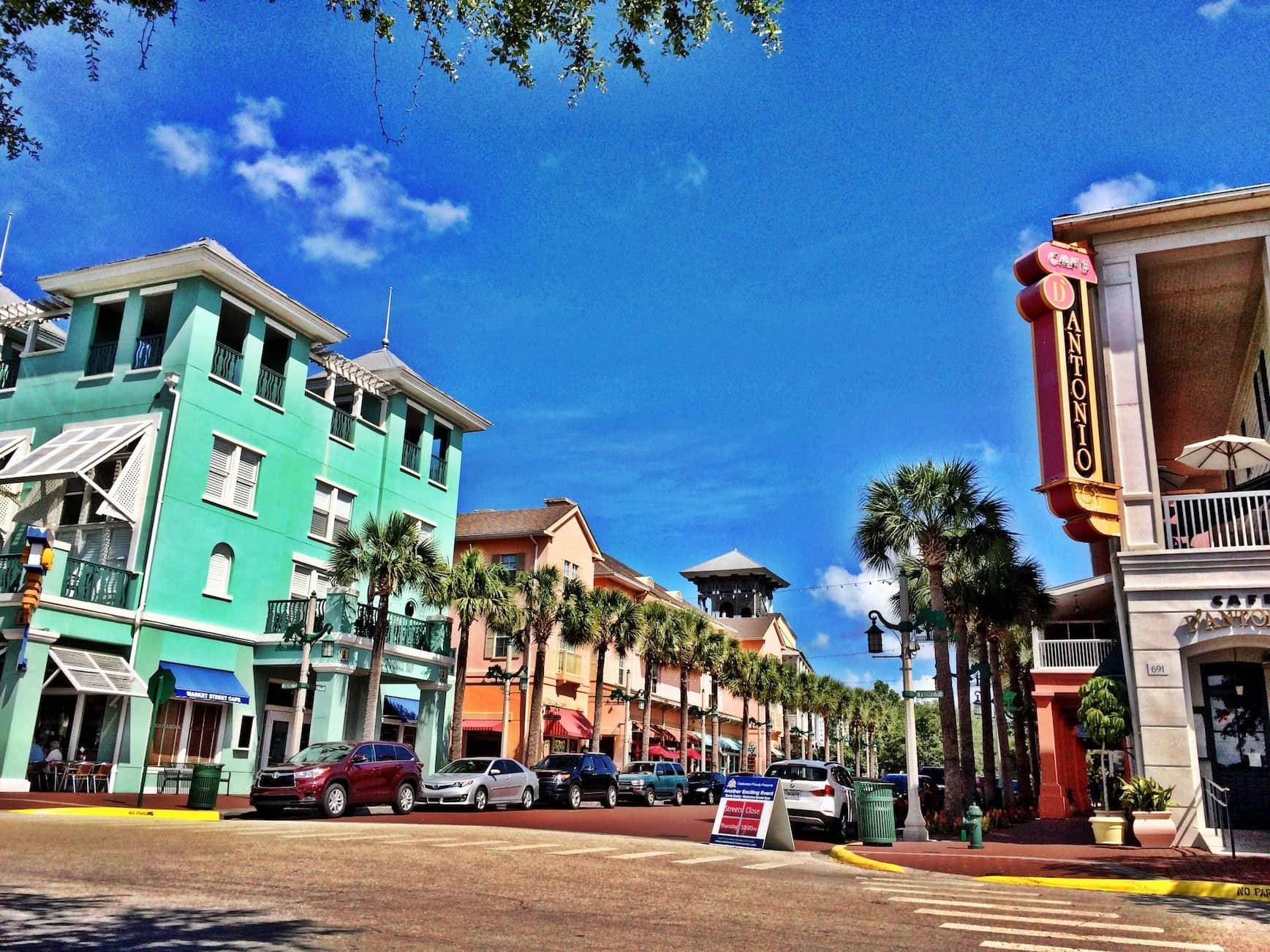
Celebration, Florida: A Guide to Disney's Charming Town Near Kissimmee
Everyone calls Celebration "Disney's town", and Disney sold the downtown in 2004. Here is what the place actually is now — a walkable lakefront district ten minutes from the parks, best on a Sunday morning or a warm evening.

The Mall at Millenia: Orlando's Luxury Shopping Destination
Orlando's upscale mall comes with a multilingual concierge, free personal styling and same-day delivery — services no other centre in the city offers. Here is who it suits, and who should go elsewhere.